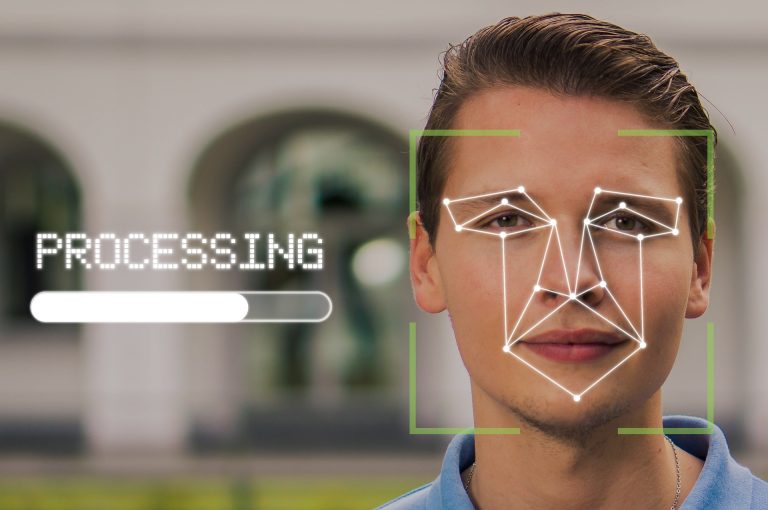
Have you heard about multimodal AI? The technology brings about a new turn for inclusion in banking services, by enhancing accessibility.
While Generative AI (GenAI) represents a paradigm shift by venturing into the realm of creation; bringing sophisticated linguistic and visual capabilities, bridging gaps between customer needs and technological possibilities.
Best wishes, The MBA team
Gen AI and conversational AI: The future of banking
25 October 2024
‘Factors such as climate change, geopolitical tensions, supply chain disruptions, and slow economic growth are pushing banks to modernise to maintain customer trust and ensure business sustainability. Generative AI (GenAI) and conversational AI offer unprecedented potential in this transformation. While AI traditionally excelled at making objective inferences from numerical data, GenAI represents a paradigm shift by venturing into the realm of creation. It brings sophisticated linguistic and visual capabilities, bridging gaps between customer needs and technological possibilities. Conversational AI, on the other hand, replicates human conversation’s naturalness, reshaping how banks operate and engage with customers.’
Behind the bot: A history of automated customer interaction systems in banking
25 October 2024
‘Multimodal AI is also set to enhance customer engagement by combining voice, text and visual interfaces, creating more intuitive and seamless interactions. For instance, a customer might start a loan application process via a mobile app, continue the conversation with a voice-activated AI assistant and complete the process through a video chat with a human representative — all while the AI system maintains context across these different modes. Multimodal AI significantly can enhance accessibility, making banking services more inclusive for customers with diverse needs and preferences. For banks, this technology can lead to increased engagement and improved customer experience by allowing customers to interact through their preferred channels.’
White paper identifies deepfake fraud types and controls
24 October 2024
‘The white paper lists different types of deepfake fraud targeting financial institutions, from videos impersonating C-suite executives to technology duplicating customer voices to thwart voice-authentication security measures. It also lists the types of assets under threat from deepfakes and summarizes controls that can be implemented to protect against the technology. The paper emphasizes that the role of education and awareness in combating deepfakes “cannot be overstated.” ’
‘Bank customers in the digital age have more options – and expectations – than ever. To succeed in such a hypercompetitive environment, a good option is a collaborative, AI-based approach to the customer journey that avoids the pitfalls of segmented functionality and siloed data. Integrating AI capabilities into cloud-based systems and processes provides banks with a comprehensive and transparent view of the customer journey that makes it easier to spot both revenue opportunities and potential problems that may diminish the customer experience and brand loyalty.’
New York State issues guidance on AI-related cybersecurity risks to financial institutions
18 October 2024
‘The document lists risks arising from AI along with controls and measures that institutions can implement to mitigate threats. It does not impose any new requirements on financial institutions. Risks include AI-enabled social engineering, in which the technology allows bad actors to create realistic and interactive audio, video and text that allow them to target specific individuals. The guidance also notes that AI can amplify the scale and speed of existing cyberattacks, and that AI products typically require the collection of a vast amount of data that must be secured.’
BOCHK makes fully automated transactions of corporate remittances
30 October 2024
‘The integration enables corporate customers to seamlessly initiate mBridge remittance applications online and lays the foundation for future 24/7 cross-border remittance processing, BOCHK said in a press release. BOCHK is the first Hong Kong commercial bank to connect to mBridge. Project mBridge aims to study how central bank digital currencies (CBDCs) and innovative technologies can be applied to address common pain points in cross-border payments.’
New cryptography guidance outlines process for banks to strengthen IT security
8 October 2024
‘The paper by the Financial Services Information Sharing and Analysis Center, or FS-ISAC, provides financial firms a framework to improve their “cryptographic agility,” which measures an organization’s ability to adapt cryptographic solutions or algorithms quickly and efficiently in response to new developments and threats. FS-ISAC warns that the move to crypto agility must begin immediately as quantum computing is likely to make a commonly used class of cryptography algorithms insecure in the next few years.’
Balancing act: Enhancing operational effectiveness while managing financial crime risks
29 October 2024
‘Regulation, industry best practices and technological advancements are ever-evolving. If change is the only constant, then companies should regularly question and reassess their operations, as more efficient and risk-effective alternatives may exist. However, before streamlining operations and adjusting policies, it is crucial to understand the reasoning behind the current requirements, alongside the aims and goals for initiating change. Proposed changes should be discussed with the owner/architect of the existing processes to ascertain if the change would have unforeseen consequences.’
Paysafe and Deutsche Bank to Enable Cash Services at Retailers
29 October 2024
‘Paysafe and Deutsche Bank have partnered to enable the bank’s customers in Germany to deposit and withdraw cash to and from their bank accounts at 12,500 participating retail locations across the country. With this service, customers can make these deposits or withdrawals at the retail locations like REWE, Penny, DM and Rossman, without having to visit a bank branch or ATM, the companies said in a Tuesday (Oct. 29) press release. This service will be introduced to the private customers of the bank’s Postbank brand in November and then expanded to its Deutsche Bank brand in the second half of 2025, according to the release. “With Paysafe’s barcode solution, we are expanding our deposit and withdrawal service from bank counters and ATMs to a German-wide network of 12,500 supermarkets and pharmacy locations,” Thorsten Peppler, chief operating officer personal banking Germany Deutsche Bank, said in the release.’
This website uses cookies to improve your experience while you navigate through the website. Out of these, the cookies that are categorized as necessary are stored on your browser as they are essential for the working of basic functionalities of the website. We also use third-party cookies that help us analyze and understand how you use this website. These cookies will be stored in your browser only with your consent. You also have the option to opt-out of these cookies. But opting out of some of these cookies may affect your browsing experience.
Necessary cookies are absolutely essential for the website to function properly. These cookies ensure basic functionalities and security features of the website, anonymously.
Cookie
Duration
Description
cookielawinfo-checkbox-analytics
11 months
This cookie is set by GDPR Cookie Consent plugin. The cookie is used to store the user consent for the cookies in the category "Analytics".
cookielawinfo-checkbox-functional
11 months
The cookie is set by GDPR cookie consent to record the user consent for the cookies in the category "Functional".
cookielawinfo-checkbox-necessary
11 months
This cookie is set by GDPR Cookie Consent plugin. The cookies is used to store the user consent for the cookies in the category "Necessary".
cookielawinfo-checkbox-others
11 months
This cookie is set by GDPR Cookie Consent plugin. The cookie is used to store the user consent for the cookies in the category "Other.
cookielawinfo-checkbox-performance
11 months
This cookie is set by GDPR Cookie Consent plugin. The cookie is used to store the user consent for the cookies in the category "Performance".
viewed_cookie_policy
11 months
The cookie is set by the GDPR Cookie Consent plugin and is used to store whether or not user has consented to the use of cookies. It does not store any personal data.
Functional cookies help to perform certain functionalities like sharing the content of the website on social media platforms, collect feedbacks, and other third-party features.
Performance cookies are used to understand and analyze the key performance indexes of the website which helps in delivering a better user experience for the visitors.
Analytical cookies are used to understand how visitors interact with the website. These cookies help provide information on metrics the number of visitors, bounce rate, traffic source, etc.
Advertisement cookies are used to provide visitors with relevant ads and marketing campaigns. These cookies track visitors across websites and collect information to provide customized ads.