This year’s theme – ‘Empowering Sustainable Development Through Finance’, highlights the essential role that banking systems play in supporting sustainable development. Sustainability is a key priority for the Mauritius Bankers Association, as evidenced by our ongoing work with stakeholders to support the development of green finance, and a healthier financial ecosystem.
While the Financial Services Information Sharing and Analysis Center has published a framework of recommended best practices to help financial services institutions counter phishing attacks.
Best wishes, The MBA team
Bank of Mauritius leadership team
3 December 2024
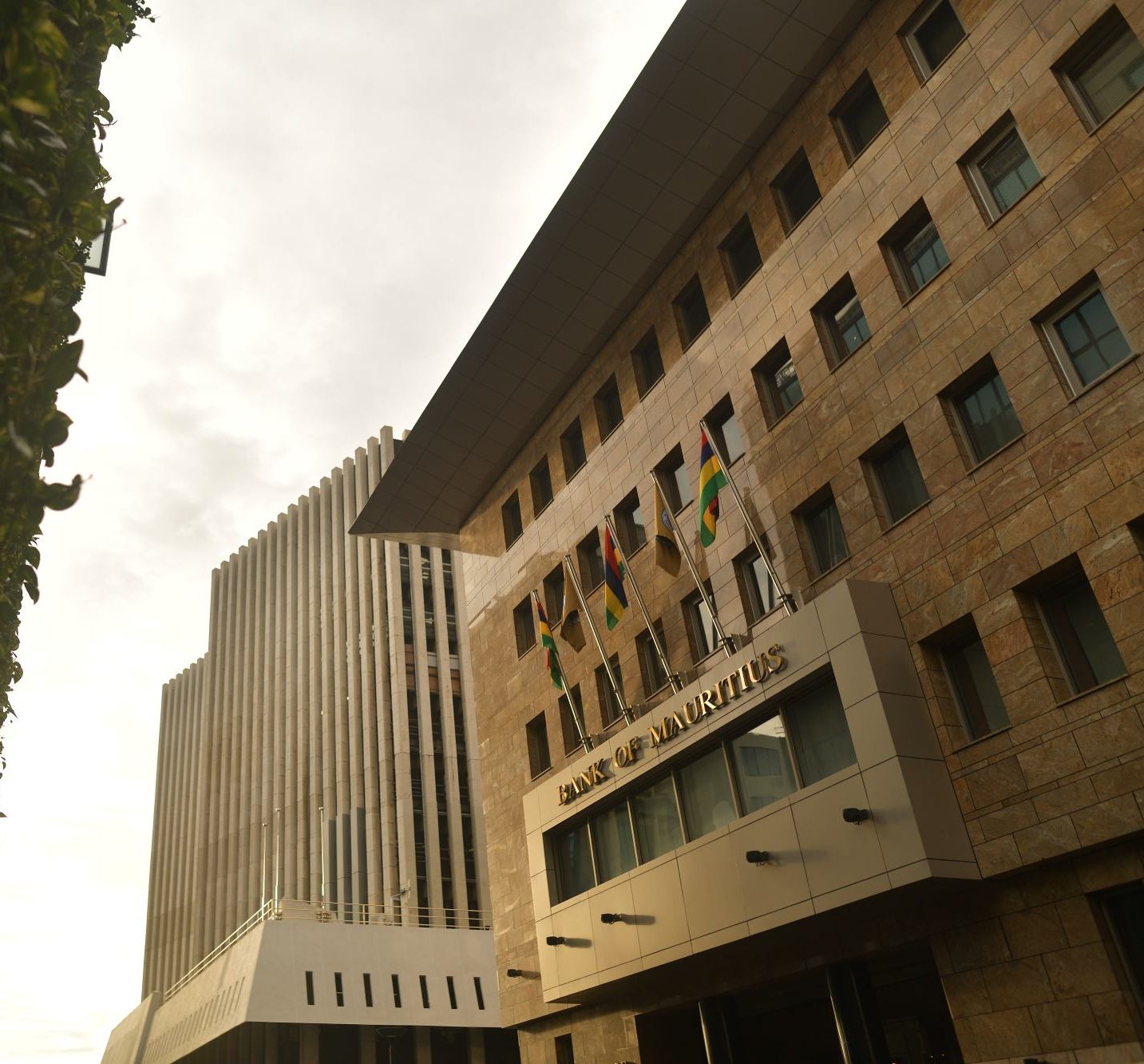
Following the appointment of Dr. Rama Sithanen as Governor of the Bank of Mauritius on 16 November 2024, the President of the Republic of Mauritius has appointed Messrs Rajeev Hasnah, and Gérard Sanspeur, as First Deputy Governor, and Second Deputy Governor respectively, effective 2 December 2024.
The Mauritius Bankers Association extends its congratulations to the team, and looks forward to collaborating towards the development of the banking sector.
The Bank of Mauritius (BoM) is introducing new Rs1000 polymer banknotes, with new security features. These will circulate alongside the current paper banknotes, both of which will remain legal tender.
While these new polymer notes may closely resemble the existing paper ones, they include new security elements of a Dodo within a transparent window and a ‘SPARK Flow® PRIME’ feature. To learn more about these features, click here.
BoM is collaborating closely with financial institutions and cash handlers to ensure a smooth transition to the new banknotes. Polymer notes in Rs100 and Rs200 denominations will be issued in 2025.
Global fight against money laundering: progress on paper, success elusive
2 December 2024
‘ “The stark gap between technical compliance and effectiveness with regard to FATF standards raises concerns about whether investments in anti-money laundering systems are leading to tangible results. But financial crime is a multi-dimensional and fast-evolving phenomenon with significant social, political and economic implications. We cannot assess success by looking at systems in isolation; it’s important to consider broader factors such as financial transparency, civil liberties, media freedom and judicial independence. That’s why the Basel AML Index provides data on these factors, alongside indicators of fast-evolving threats like environmental crime and fraud.” ’
MAS Imposes Civil Penalty of $2.4 million on JPMorgan Chase Bank, N.A. for Misconduct by its Relationship Managers
2 December 2024
‘JPM did not establish adequate processes and controls to ensure that its RMs adhered to pre-agreed spreads with clients when executing OTC bond transactions on their behalf. MAS sampled OTC bond transactions conducted by JPM’s RMs and found that in the 24 transactions, RMs had either misrepresented the price components[2] or omitted material information that the spreads charged were above the agreed rates, in contravention of sections 201(c) and 201(d) of the Securities and Futures Act (SFA). JPM has admitted liability under section 236C of the SFA for its failure to prevent or detect the misconduct by its RMs and has paid MAS the civil penalty. The bank has refunded the overcharged fees to affected clients. The bank has also enhanced its pricing frameworks and internal controls to prevent the recurrence of such misconduct. Separate reviews into the individual RMs involved in the misconduct are ongoing.’
The future of crypto-assets in Luxembourg’s financial sector
26 November 2024
‘The event highlighted several critical aspects shaping the future of crypto-assets:
opportunities and risks Participants explored the significant potential of crypto-assets while addressing challenges such as combating financial crime and ensuring compliance with AML/CFT regulations.
the need for collaboration The discussions emphasised the importance of public-private cooperation in driving progress and fostering trust in the crypto ecosystem.
a clear regulatory framework with MiCA The Markets in Crypto-Assets Regulation (MiCA) offers a robust framework to enable financial institutions to integrate crypto-assets in a compliant manner and meet growing customer demands.
adaptation of financial institutions As global demand for crypto-assets and related services increases, institutions must adapt to remain competitive in this dynamic environment.
focus on compliance and skills Legal certainty and effective compliance functions, supported by skilled professionals, are essential for navigating the complexities of this evolving market.’
Limiting the impacts of future financial crime: Fraudulent exploitation of Central Bank Digital Currencies
25 November 2024
‘Credit card fraud, APP scams, and pig butchering scams, to name but a few, rely on victims’ access to funds. The larger the amount held, the more interested fraudsters are. CBDC holding limits are undecided, with current estimates for the UK sitting around £10,000-£20,000. However, it may be advisable to introduce lower limits to deter fraudsters, as the reward may not be worth the risk or effort…. A final UK CBDC model has yet to be developed. However, efforts should be made to ringfence interoperability with cash. CBDCs, which seek to offer a digital representation of cash, will be a novel payment option that could appeal to countless users. A considerable uptake will undoubtedly pique criminal interest. Consequently, should bad actors successfully exploit users or the underlying infrastructure, limiting the cashing-out options is essential.’
Is there a link between forbearance arrangements, credit files and mortgage lending?
27 November 2024
‘Working closely with trade bodies and the Financial Conduct Authority (FCA), mortgage lenders have strengthened forbearance provisions, offering temporary support to help borrowers. Examples available under the FCA’s mortgage rulebook in MCOB 13 include: mortgage term extensions, temporary interest-only payments, and more. Since the pandemic, forbearance arrangements have evolved, with a shift towards more tailored support and increased transparency in how they are reported to Credit Reference Agencies (CRAs). This blog explores these changes and what they mean for both mortgage lenders and borrowers.’
Visa, Mastercard: Proposed credit card routing bill would jeopardize security, consumer choice
19 November 2024
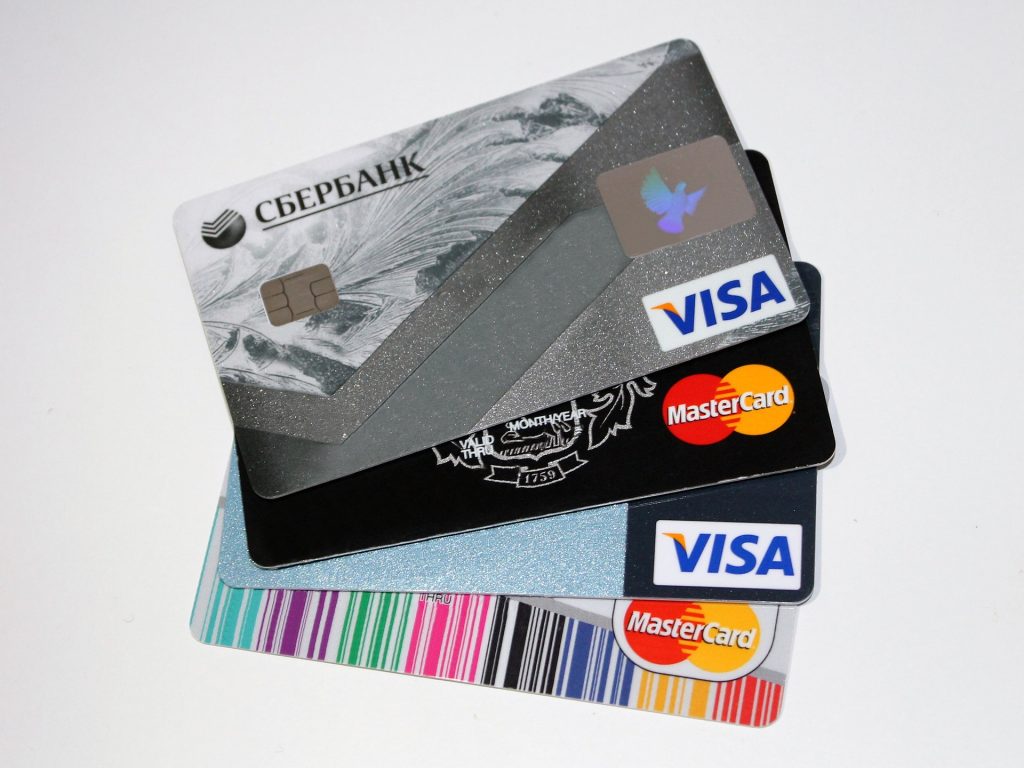
‘Bill Sheedy, senior advisor to the CEO of Visa, told lawmakers that payments systems are facing growing threats from nation states and criminals seeking to commit fraud. “Government regulation should encourage innovation, security and consumer choice,” he said. “The Credit Card Competition Act, however, would remove consumer control over their own payment decisions, reduce competition and impose technology-sharing mandates and pick winners and losers by favoring certain competitors over others.” ’
FS-ISAC releases framework to help financial institutions fight phishing
20 November 2024
‘According to an FS-ISAC summary, the framework’s recommendations fall into four broad categories: collecting intelligence from consumers and sharing it among a firm’s departments, employees and customer education; maintaining a catalog of telephone numbers used by the institution and third-party partners to prevent spoofing; and collaborating with telecommunications providers to deploy anti-phishing solutions. The framework also recommends that institutions implement two best practices. First, institutions should design a fraud and phishing intake process with clear, concise questions to gather actionable intelligence while minimizing the burden on consumers. Second, they should set up an “abuse box” infrastructure, enabling consumers to report phishing attempts.’
FHA extends compliance deadline for face-to-face requirement for borrowers in default
21 November 2024
‘Earlier this year, FHA issued a final rule that made permanent a pandemic-related rule that waives the Department of Housing and Urban Development’s requirement for mortgagees to meet in person with borrowers who are in default on their mortgage payments. The agency originally set a Jan. 1, 2025, compliance date for the rule and published a draft mortgagee letter outlining how the policy would be implemented. However, the American Bankers Association and other associations warned that the guidance outlined in the letter would make the process more onerous as it was “vague and operationally infeasible.” The associations urged FHA to delay the compliance deadline so the draft letter could be amended and reproposed. They also requested an extension of the temporary waiver that has been in place for face-to-face meetings since the pandemic. FHA agreed to push back the compliance deadline and waiver to July 1, 2025. The agency also plans to publish a new mortgagee letter.’
Vietnam’s central bank urges credit firms to reduce loan fees, simplify process
29 November 2024
‘The State Bank of Vietnam (SBV) has issued Document No. 9364/NHNN-TD, which requests CIs to implement solutions that support enterprises to “overcome difficulties and promote their production and business activities” in 2024 and the following years. CIs are asked to reduce costs, and to review their fees with a view of considering possible exemptions and reduction of all unnecessary fees. The central bank also requested that CIs publicize the fees applied by the credit institutions to the provision of their products and services.’
‘Recent remarks by the finance minister and the Irdai chairman on the “mis-selling” of insurance products via banks are likely to push life insurers to reassess commission structures, broaden distribution channels and reduce dependence on bancassurance, which currently drives over half of the industry’s business. Earlier this week, Debasish Panda, chairman of the Insurance Regulatory and Development Authority of India (Irdai), urged banks to focus on their “core job”, rather than prioritising insurance sales, which he described as “incidental” to banking. “Banca is a very useful channel. But of late, a lot of ills have crept into the system,” Panda noted, highlighting the presence of “mis-selling” through this channel.’
This website uses cookies to improve your experience while you navigate through the website. Out of these, the cookies that are categorized as necessary are stored on your browser as they are essential for the working of basic functionalities of the website. We also use third-party cookies that help us analyze and understand how you use this website. These cookies will be stored in your browser only with your consent. You also have the option to opt-out of these cookies. But opting out of some of these cookies may affect your browsing experience.
Necessary cookies are absolutely essential for the website to function properly. These cookies ensure basic functionalities and security features of the website, anonymously.
Cookie
Duration
Description
cookielawinfo-checkbox-analytics
11 months
This cookie is set by GDPR Cookie Consent plugin. The cookie is used to store the user consent for the cookies in the category "Analytics".
cookielawinfo-checkbox-functional
11 months
The cookie is set by GDPR cookie consent to record the user consent for the cookies in the category "Functional".
cookielawinfo-checkbox-necessary
11 months
This cookie is set by GDPR Cookie Consent plugin. The cookies is used to store the user consent for the cookies in the category "Necessary".
cookielawinfo-checkbox-others
11 months
This cookie is set by GDPR Cookie Consent plugin. The cookie is used to store the user consent for the cookies in the category "Other.
cookielawinfo-checkbox-performance
11 months
This cookie is set by GDPR Cookie Consent plugin. The cookie is used to store the user consent for the cookies in the category "Performance".
viewed_cookie_policy
11 months
The cookie is set by the GDPR Cookie Consent plugin and is used to store whether or not user has consented to the use of cookies. It does not store any personal data.
Functional cookies help to perform certain functionalities like sharing the content of the website on social media platforms, collect feedbacks, and other third-party features.
Performance cookies are used to understand and analyze the key performance indexes of the website which helps in delivering a better user experience for the visitors.
Analytical cookies are used to understand how visitors interact with the website. These cookies help provide information on metrics the number of visitors, bounce rate, traffic source, etc.
Advertisement cookies are used to provide visitors with relevant ads and marketing campaigns. These cookies track visitors across websites and collect information to provide customized ads.