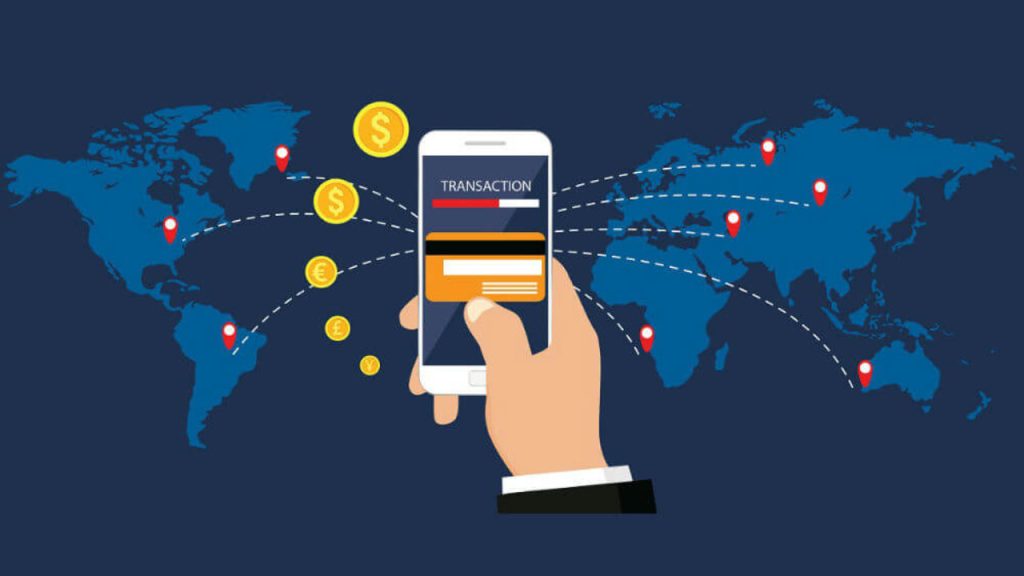
Nearly four out of five U.S. consumers use their banking app weekly, with many saying they “can’t live” without it, survey reports. Tools to monitor financial health were an important feature, particularly for younger generations.
Australian banks still maintain a higher branch density than the OECD average, despite branch interactions falling by 50 per cent in recent years, as customers switch to digital channels.
In Luxembourg, despite increasing digitalisation, 29% of citizens find the option to pay with cash in stores very important.
Best wishes, The MBA team
Outcomes of FATF Plenary
21 February 2025
Delegates from the FATF’s Global Network of over 200 jurisdictions and observers from international organisations participated in three days of technical discussions from 19 to 21 February 2025 to determine measures to address key money laundering, terrorism financing and proliferation financing issues.
Key outcomes include:
1. Jurisdictions under Increased Monitoring Lao People’s Democratic Republic and Nepal were added to the list.
2. Jurisdictions No Longer Subject to Increased Monitoring Philippines.
3. Jurisdictions subject to a call for action Iran, Democratic People’s Republic of Korea’s (DPRK) and Myanmar.
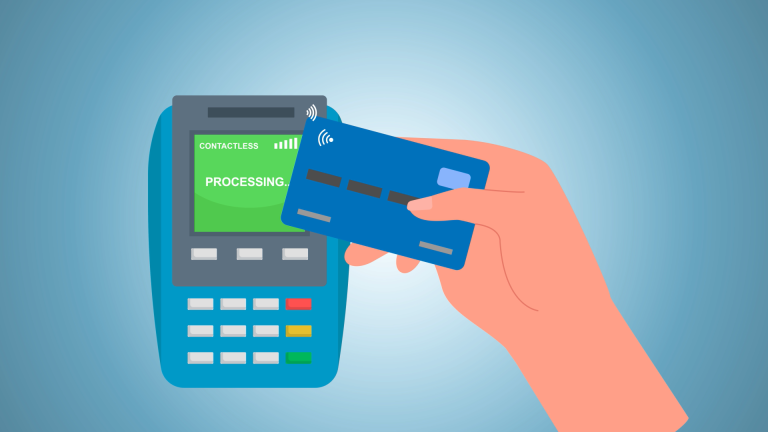
Joint advisory on unauthorised card transactions made using contactless payment methods in Singapore
17 February 2025
‘On 22 November 2024, SPF published a news release on scammers abusing phished card credentials. This modus operandi starts with the scammer (suspected to be based overseas) obtaining the victim’s card credentials through e-commerce related phishing websites, including social media advertisements. The scammer then adds the card details onto the Apple wallet of his own device. An SMS One-Time Password (OTP) would be sent to the victim, who is then tricked to enter the OTP into the phishing website operated by the scammer, thereby giving the scammer access to their card. After successfully taking over the victim’s card, the scam syndicate will conspire with a money mule to make unauthorised transactions by connecting the mule’s mobile device to the scammer’s Apple wallet. The money mule would then be able to make in-person purchases using the contactless payment method (also known as Near Field Communication (NFC) mobile payments) to buy goods in-store, for example, high value electronic items or luxury goods.’
Payment preferences in Luxembourg: Key insights from 2025
26 February 2025
‘Cash: Despite increasing digitalisation, 29% of Luxembourg citizens find the option to pay with cash in stores very important. Digital payments: Luxembourg ranks second in Europe for digital payment adoption, with 95% of transactions being cashless in 2024 (up from 88% in 2022). Peer-to-peer transactions: One in three residents uses a mobile payment app to transfer money to others. Instant payments: With 72% of citizens having access and 57% actively using instant payments, Luxembourg is second only to the Netherlands. Security: 47% of Luxembourgers prefer maintaining a second authentication method, and 25% appreciate using biometric identification. Crypto assets: 12% of citizens own crypto assets, representing a 33% increase since 2022.’
Federal Council decides on regulatory approach to AI in Switzerland
14 February 2025
‘On 12 February 2025, the Federal Council published an overview of possible regulatory approaches to artificial intelligence (AI) in Switzerland. On the basis of this, it has decided on a Swiss approach with the objectives of reinforcing Switzerland as a centre of innovation, safeguarding fundamental rights (including economic freedom) and increasing public trust in AI. The Swiss Bankers Association (SBA) welcomes the Federal Council’s objectives and its intention to continue relying on the established principles of technology-neutral, principles-based and targeted regulation.’
Banks urge Parliament to modernise payment system regulation
4 February 2025
‘The ABA is urging the Parliament to swiftly pass legislation that will ensure Australia’s payments regulatory framework remains fit-for-purpose as digital payments continue to skyrocket. According to the RBA, each month Australians are now making over 500 million payments with mobile wallets worth over $20 billion. This legislation will give the RBA powers to regulate all players within the payments system including Apple and Google, to ensure it is fair and safe for all customers. ABA CEO Anna Bligh said the payments landscape had evolved significantly with the introduction of mobile wallets and these reforms would ensure Australia continued to maintain a world-class payments system.’
‘Despite branch interactions falling by 50 per cent in recent years as customers switch to digital channels, Australian banks still maintain a higher branch density than the OECD average. This commitment today sees: major banks extend the moratorium on branch closures for two and a half years, until mid-2027; CBA, NAB and Westpac all reach new in-principle Bank@Post agreements; negotiations between Australia Post and ANZ reach an advanced stage, with key terms agreed which would see ANZ customers able to use Bank@Post services from 1 October 2025. Macquarie and HSBC will also start negotiations with Australia Post on Bank@Post services. ABA CEO Anna Bligh said the industry remained strongly committed to meeting the needs of customers in the bush.’
Australia taking world first approach in war against scammers
13 February 2025
‘ “Australian banks will also be held to account for the actions they are taking to protect customers. Banks are ramping up anti-scam measures through our industry’s Scam-Safe Accord. “Scam losses are down by 33 per cent, however there is still more work to be done to drive them down even further. We now have the legislative foundation to stay one step ahead of scammers and drive them out of Australia.” ABA Chief of Policy Christopher Taylor said with the framework now enshrined in law, it was important effective mandatory industry codes were developed to ensure all regulated entities are required to take strong action to combat scams. “Banks will now work closely with the Government and other sectors on the development of mandatory industry codes as well as a single complaints body to provide more consistent outcomes for customers,” Mr Taylor said.’
New rule book for banks to strengthen customer protections
28 February 2025
‘Continuing to drive better outcomes for customers is the key focus of the ABA’s new Banking Code of Practice, being launched today…. In addition to the new small business definition, key features of the new Code include: new obligations for banks to meet with customers intending to act as guarantor to help them understand their obligations before accepting a guarantee; a new vulnerable customer definition, acknowledging anyone can become vulnerable at any time; new provisions for managing deceased estates; a new commitment to organise or refer customers to free support services such as interpreters, AUSLAN and National Relay Services; greater clarity on the types of support available to all customers, including financial difficulty options for small businesses; and an updated section on inclusive and accessible banking which recognises banking services should be inclusive of people with diverse sexual orientations.’
Survey: Financial health tools popular feature in bank apps
24 February 2025
‘Nearly four out of five U.S. consumers use their banking app weekly, with many saying they “can’t live” without their app, according to the annual Digital Banking Attitudes Survey by Chase. The survey also found that consumers are using digital tools to book travel and entertainment and manage home and auto loans, with 60% of respondents saying they would use an app to pay an auto loan. Tools to monitor financial health were an important feature in apps for many respondents, particularly younger generations. Sixty-nine percent said they were interested in credit monitoring or improving their score, with Gen Z the most interested at 74%, followed by millennials at 72%. Among respondents whose banks provide credit monitoring services, 33% said they use their banking app to check their credit score.’
This website uses cookies to improve your experience while you navigate through the website. Out of these, the cookies that are categorized as necessary are stored on your browser as they are essential for the working of basic functionalities of the website. We also use third-party cookies that help us analyze and understand how you use this website. These cookies will be stored in your browser only with your consent. You also have the option to opt-out of these cookies. But opting out of some of these cookies may affect your browsing experience.
Necessary cookies are absolutely essential for the website to function properly. These cookies ensure basic functionalities and security features of the website, anonymously.
Cookie
Duration
Description
cookielawinfo-checkbox-analytics
11 months
This cookie is set by GDPR Cookie Consent plugin. The cookie is used to store the user consent for the cookies in the category "Analytics".
cookielawinfo-checkbox-functional
11 months
The cookie is set by GDPR cookie consent to record the user consent for the cookies in the category "Functional".
cookielawinfo-checkbox-necessary
11 months
This cookie is set by GDPR Cookie Consent plugin. The cookies is used to store the user consent for the cookies in the category "Necessary".
cookielawinfo-checkbox-others
11 months
This cookie is set by GDPR Cookie Consent plugin. The cookie is used to store the user consent for the cookies in the category "Other.
cookielawinfo-checkbox-performance
11 months
This cookie is set by GDPR Cookie Consent plugin. The cookie is used to store the user consent for the cookies in the category "Performance".
viewed_cookie_policy
11 months
The cookie is set by the GDPR Cookie Consent plugin and is used to store whether or not user has consented to the use of cookies. It does not store any personal data.
Functional cookies help to perform certain functionalities like sharing the content of the website on social media platforms, collect feedbacks, and other third-party features.
Performance cookies are used to understand and analyze the key performance indexes of the website which helps in delivering a better user experience for the visitors.
Analytical cookies are used to understand how visitors interact with the website. These cookies help provide information on metrics the number of visitors, bounce rate, traffic source, etc.
Advertisement cookies are used to provide visitors with relevant ads and marketing campaigns. These cookies track visitors across websites and collect information to provide customized ads.